Understanding Automatic Garage Door Opener Components and What They Mean for Your Door’s Performance
After handling countless garage door service calls, we can say with certainty that many homeowners underestimate how much the opener its main components affect overall garage door reliability. Our technicians are licensed and insured and have years of combined experience on these systems — that context matters here. We see everyday problems trace back to overlooked parts within the opener assembly, leading to unnecessary garage door repair services that could have been prevented. Knowing how each piece functions can save significant time and money, especially when considering garage door installation cost or spring replacement.
Automatic garage door openers consist of key components such as the motor, drive mechanism (chain, belt, or screw), trolley, and safety sensors, each crucial for smooth and reliable door operation. Understanding these parts helps identify performance issues and ensures proper maintenance, ultimately enhancing the door’s efficiency, safety, and longevity.
Breaking Down the Opener Its Main Components
The automatic garage door opener is more than just a motor and a remote. Understanding its anatomy helps you see why issues arise. Key garage door opener components include:
- Motor Unit: The powerhouse that drives the opener, either chain, belt, or screw-driven. In our area, belt-drive motors like those found in LiftMaster models often outperform chain drives in terms of noise and durability.
- Rail and Carriage: The track along which the trolley slides, connecting the motor to the door arm.
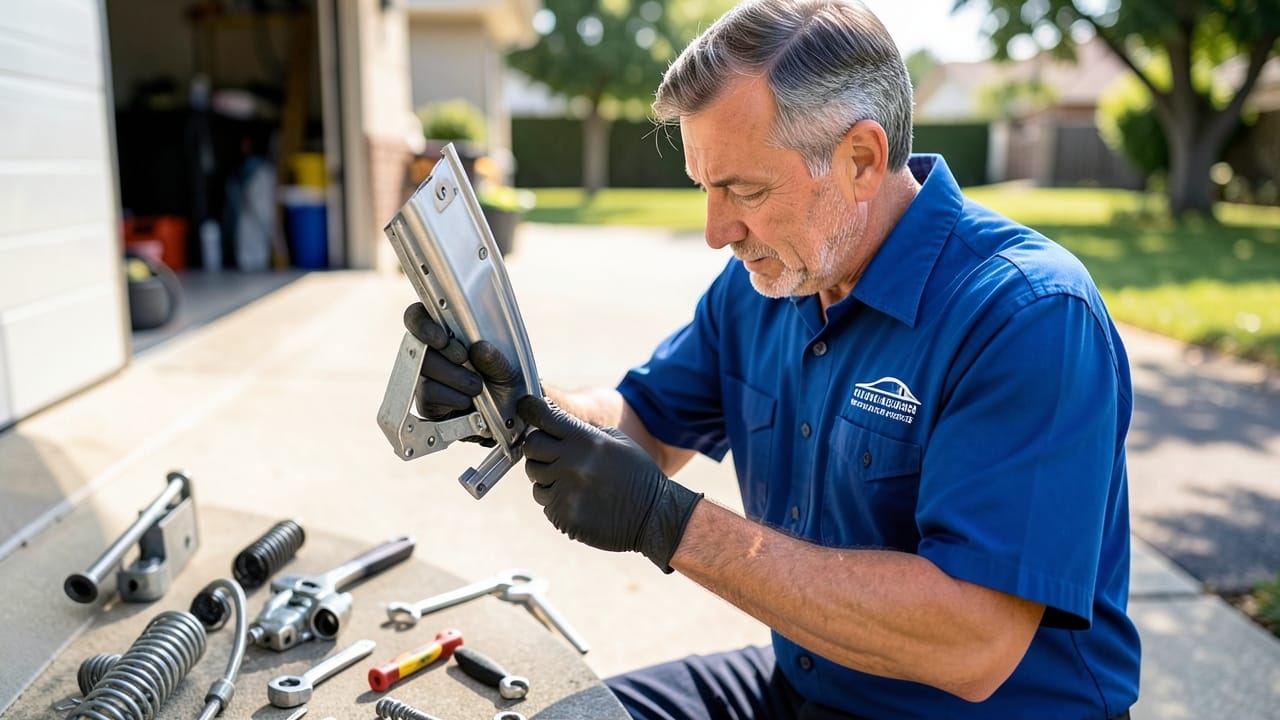
- Door Arm: The linkage that attaches the trolley to the garage door itself, transmitting motion to open or close the door.
- Control Board: The circuit board managing signals from remotes and sensors.
- Safety Sensors: Positioned near the floor, these infrared eyes stop the door from closing on objects or people — one of the first things to check if you notice garage door sensor issues.
- Remote Controls and Keypads: The user interface for opening and closing, often needing reprogramming after maintenance or troubleshooting.
Recognizing these parts is the first step toward effective garage door troubleshooting — a skill that differentiates affordable garage door repair from frequent emergency garage door repair visits.
Why Most Companies Tell You to Replace the Whole Opener — We Think Otherwise
Most companies tell you that when your opener acts up, the best solution is a full replacement. Here’s what our crews actually find doing this work, day in and day out: many issues stem from a single failing component like a worn-out rail, a misaligned sensor, or a faulty control board. Replacing the entire opener, especially when the door itself is in good shape, often inflates garage door installation cost unnecessarily.
For example, garage door sensor issues are commonly mistaken for major opener failure. A simple realignment or cleaning usually fixes the problem. Similarly, we frequently repair or replace garage door cables or door arms rather than discarding the opener assembly. Our approach is more cost-effective and significantly reduces downtime, especially in urgent cases needing emergency garage door repair.
Of course, if the motor unit itself has burned out or the control board is irreparably damaged, replacement becomes the only option. But the key to saving money and frustration is diagnosing the opener its main components carefully before jumping to conclusions.
Local Factors That Change How We Approach Garage Door Opener Maintenance
In our region, the local climate and dust levels create unique challenges for garage door maintenance. The humidity tends to affect the lubrication of garage door spring replacement and opener components, while airborne dust gets into the rail and sensors more quickly than in drier areas. This accelerates wear on LiftMaster and Chamberlain models, which are the two most common brands we service locally.
That means regular garage door maintenance tips here emphasize cleaning the rail and sensors every few months and using specific lubricants suited to humid coastal air. Also, due to frequent power fluctuations, we recommend homeowners consider surge protectors for their automatic garage door openers to avoid damage to control boards.
Garage Door Sensor Issues Aren’t Always What They Seem
Sensor malfunctions are among the most frequent reasons for garage door failure, yet the fix is often straightforward. Common symptoms include the door reversing unexpectedly or refusing to close entirely. Our crew has seen sensor issues caused by misalignment, dirt buildup, or wiring problems more times than we can count.
When troubleshooting, start by checking:
- If the sensors face each other directly without obstruction.
- Whether the lenses are clean and free of spider webs or dirt.
- That the sensor wiring isn’t damaged or loose.
We also caution that homeowners should avoid DIY fixes involving sensor wires unless they have experience, as improper handling can create safety hazards or void warranties.
Signs You Need Garage Door Services: A Diagnostic Checklist
How do you know if the opener its main components are behind your garage door troubles? Here are some warning signs that usually indicate a problem:
- Unusual noises during door operation, such as grinding or squealing.
- Door stops or reverses suddenly without hitting an obstacle.
- Remote control works intermittently or not at all.
- Door opens or closes partially and then stalls.
- Visible wear or damage to cables, springs, or the door arm.
For these symptoms, affordable garage door repair often involves adjusting or replacing specific opener components rather than a full system overhaul. We provide free estimates on everything, so you know upfront what your garage door installation cost or repair will look like.
What a Fair Price Actually Looks Like Here
Homeowners often ask about garage door installation cost or spring replacement pricing in our area. Here’s the short answer: garage door spring replacement typically runs between $150 and $300, depending on spring type and door weight. Cable replacement tends to be a bit less, often around $100 to $200. Opener repairs vary widely — minor fixes like sensor alignment or remote reprogramming usually fall under $100, while motor or control board replacements can run $250 to $500 or more.
Emergency garage door repair usually carries an additional fee, but for urgent calls, we’re usually available same-day. Everything we do comes with a one-year warranty on labor — that’s not standard in this industry but reflects our confidence in quality workmanship.
How to Fix Garage Door Opener Problems Without Making Things Worse
So, how do you fix a garage door opener when it stops working? Here’s an actionable garage door troubleshooting guide you can try before calling for professional garage door repair services:
- Check the Power: Make sure the opener is plugged in and the circuit breaker isn’t tripped.
- Reset the Opener: Unplug the unit for 30 seconds, then plug it back in to clear any temporary faults.
- Inspect the Sensors: Clean and realign the safety sensors.
- Test the Remote and Wall Switch: Replace batteries and ensure signals are received.
- Look for Obstructions: Inspect the door path for any physical blocks or damaged cables and springs.
If these steps don’t restore operation, it’s time to reach out for residential garage door services. Attempting repairs on springs or cables without proper tools and knowledge can be dangerous.
FAQ: Quick Answers About Garage Door Opener Components and Repairs
- Q: How do I know if my garage door opener’s motor is failing?
A: Signs include slow door movement, unusual noises, or the door failing to open fully. A motor burn smell is a red flag. - Q: Is it safe to fix garage door opener components myself?
A: Simple tasks like sensor realignment or remote programming are generally safe. Avoid spring or cable work without professional help due to high tension risks. - Q: When should I replace my entire garage door opener?
A: Consider replacement if the motor is burnt out, control board fails repeatedly, or the unit is over 15 years old. Otherwise, component repairs may suffice.
According to DASMA guidelines, proper remediation requires checking the entire opener system, not just isolated parts, to ensure safety and functionality. OSHA classifies overhead spring tension as a recognized workplace hazard, reinforcing the importance of entrusting spring and cable repairs to professionals.
We often encounter Clopay garage doors paired with LiftMaster openers in this area. Our crews replace more Clopay springs than any other brand around here, not because they fail more, but because that’s what many builders specified in the 90s. Knowing these local patterns helps us target repairs efficiently.
For deeper insights on maintenance, see What Garage Door Specialists Know About Keeping Your Door Running Smoothly. For those curious about DIY opener fixes, Can I Repair a Broken Garage Door Opener Myself? covers safe steps and limits.
Ultimately, understanding the opener its main components shifts the way you approach garage door services. You save money, avoid unnecessary replacements, and keep your garage door running reliably through targeted, informed maintenance and repair.
0 Comments