
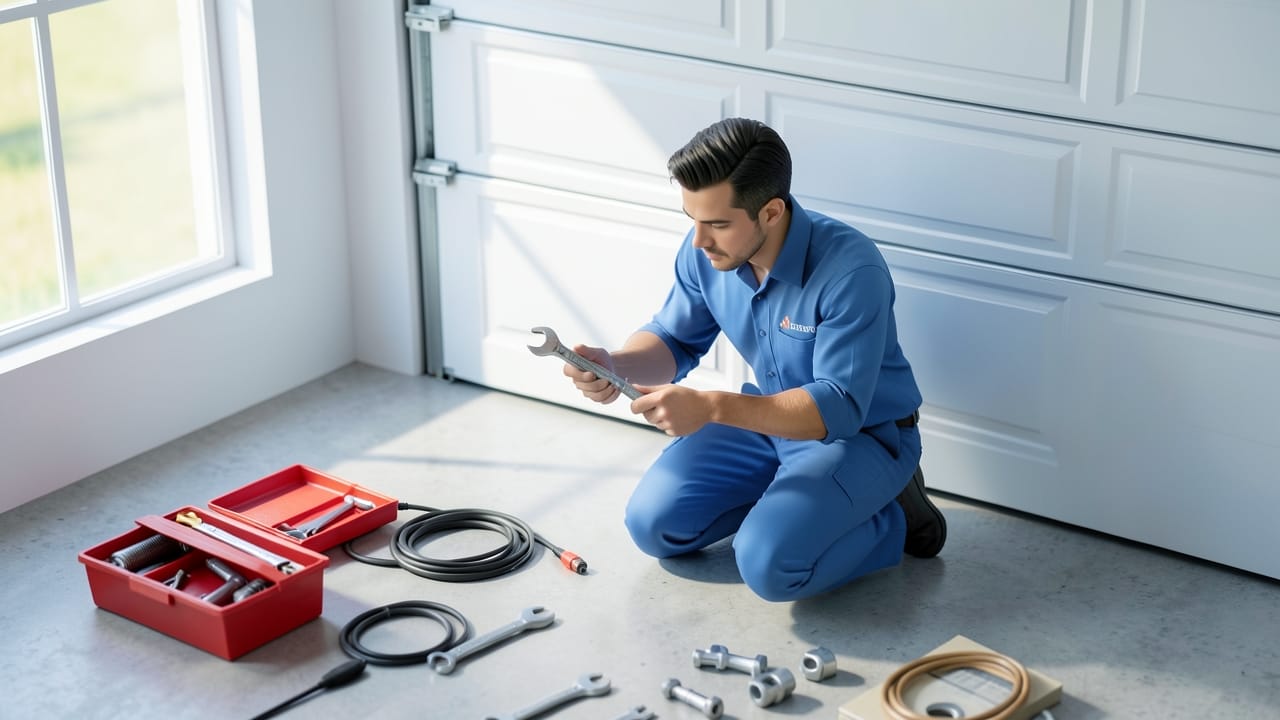
What are the signs of a broken or damaged garage door spring?
The clearest signs of a broken or damaged garage door spring are a door that refuses to open or closes unevenly, accompanied often by a loud bang or snapping sound at the moment of spring failure. Our crews see this scenario repeatedly—most garage doors stop operating properly because the tension in the spring fails, which is not always obvious from exterior inspection alone. Our technicians are licensed and insured and have years of combined experience on these systems—that context matters here when diagnosing whether it’s really the spring or a secondary issue like cable damage or opener malfunction.
Signs of a broken or damaged garage door spring include the door feeling unusually heavy or difficult to lift, a loud bang or snap sound when operating the door, and the door failing to open fully or becoming unbalanced. Visible gaps or breaks in the spring are also clear indicators of damage. Immediate professional repair is recommended to ensure safety and proper function.
The Part Most Companies Skip: Why Garage Door Safety Inspections Matter for Springs
Most companies tell you to replace a damaged garage door spring only after it breaks completely. Here’s what our crews actually find doing this work, day in and day out: failing to catch torsion spring issues before they rupture leads to emergency garage door repair calls that could have been avoided. A garage door safety inspection that includes checking spring tension, cable condition, and door balance can reveal wear signs long before a noisy failure.
This preventive approach often saves clients hundreds in repair costs and downtime. The DASMA recommends regular inspections to identify torque spring wear and potential cable fraying, which are common precursors to a broken spring. Checking these parts proactively is especially critical in areas with fluctuating temperatures where torsion springs suffer accelerated fatigue.
How to Fix Garage Door Spring: What You Can and Shouldn’t Do Yourself
Many homeowners ask, “How to fix garage door spring?” The short answer: don’t. Springs are under extreme tension; mishandling can cause severe injury or further damage. However, you can safely perform a basic diagnostic by observing these signs:
- Door is stuck open or suddenly very heavy
- Visible gaps or breaks in the torsion spring or cables
- Uneven door movement or noisy operation
If you see these, call for professional garage door repair services. Our crews offer broken garage door spring replacement and cable repair as part of our standard suite of services. We give free estimates and, for urgent calls, are usually available same-day. Everything we do comes with a two-year labor warranty—an uncommon guarantee in this field.
Local Weather’s Role in Garage Door Torsion Spring Issues
One factor many local homeowners overlook is how our regional climate affects garage door springs. In our area, humidity and seasonal temperature swings accelerate corrosion and metal fatigue. That’s why we replace more Clopay springs than any other brand around here—not because they fail more, but because that’s what builders spec’d in the 90s. Springs installed without adequate rust-resistant coatings often develop damage faster, leading to premature breakage.
We also see more garage door cable repair calls during rainy seasons when moisture hastens cable corrosion and fraying. Choosing weather-appropriate components at installation or during maintenance is key to extending the lifespan of your garage door system.
What a Fair Garage Door Spring Repair Cost Actually Looks Like Here
Garage door spring repair cost can vary widely depending on the door type, spring size, and whether cables or panels need replacement. Typically, broken garage door spring replacement runs between $150 and $350 in this market, though complicated setups or large commercial doors can push the price higher. Garage door panel replacement cost is often quoted separately; expect $200 to $600 depending on material and finish.
We always provide upfront pricing before any work begins. If a repair isn’t worth it, or if an upgrade like new LiftMaster or Chamberlain garage door opener installation makes more sense, we’ll communicate that clearly. Transparency here is crucial—our clients appreciate that honesty.
Garage Door Stuck Open Troubleshooting: What To Check Before Calling
When your garage door is stuck open, it’s tempting to think the spring is broken. Sometimes it is, but not always. Here’s a quick diagnostic checklist you can try safely:
- Check if the garage door opener is functioning—sometimes the motor or remote battery is at fault.
- Look for visible cable issues or hanging parts that could jam the door’s path.
- Inspect the door balance by manually lifting slightly—if it’s too heavy or uneven, springs are likely compromised.
- Listen for noisy garage door solutions like grinding or squealing that indicate worn rollers or tracks, not springs.
For persistent problems, we recommend a detailed inspection. According to OSHA, overhead spring tension is a recognized workplace hazard, underscoring why DIY fixes are risky.
Emergency Garage Door Repair: What Sets Us Apart in Urgent Situations
When a spring breaks unexpectedly—especially at night or on weekends—emergency garage door repair is the only option. We’ve seen just how frustrating it is when a damaged spring leaves a door stuck open, compromising home security. Our team commits to quick response times and thorough fixes that don’t just patch the symptom but address related issues like garage door cable repair or opener recalibration.
We back our work with a warranty and come back if something isn’t right. This peace of mind is rare in emergency repairs. Plus, our familiarity with common torsion spring kits from brands like Wayne Dalton means we can often source replacements faster, reducing your downtime.
FAQ: Common Questions About Damaged Garage Door Springs
- How do I know if my garage door spring is broken? Signs include a loud snap, door that won’t open or closes unevenly, or excessive heaviness when lifting manually.
- Is it safe to replace a garage door spring myself? No. Springs are under high tension and require specialized tools and expertise to replace safely.
- When should I schedule garage door maintenance? Ideally once a year to catch wear on springs, cables, and rollers before failure.
- What causes noisy garage door operation? Often loose or worn springs, failing rollers, or misaligned tracks.
- Are broken springs covered by warranty? Typically no—wear and tear is expected, but we offer labor warranties on all spring repairs we perform.
For those wanting to understand the full repair process, see our breakdown at What are the steps involved in garage door spring repair?.
Honestly, the best way to keep your garage door safe and reliable is to schedule affordable garage door maintenance regularly and to watch for those subtle early signs of torsion spring issues. That way, you avoid the noisy spring snap and emergency calls that disrupt your day.
0 Comments