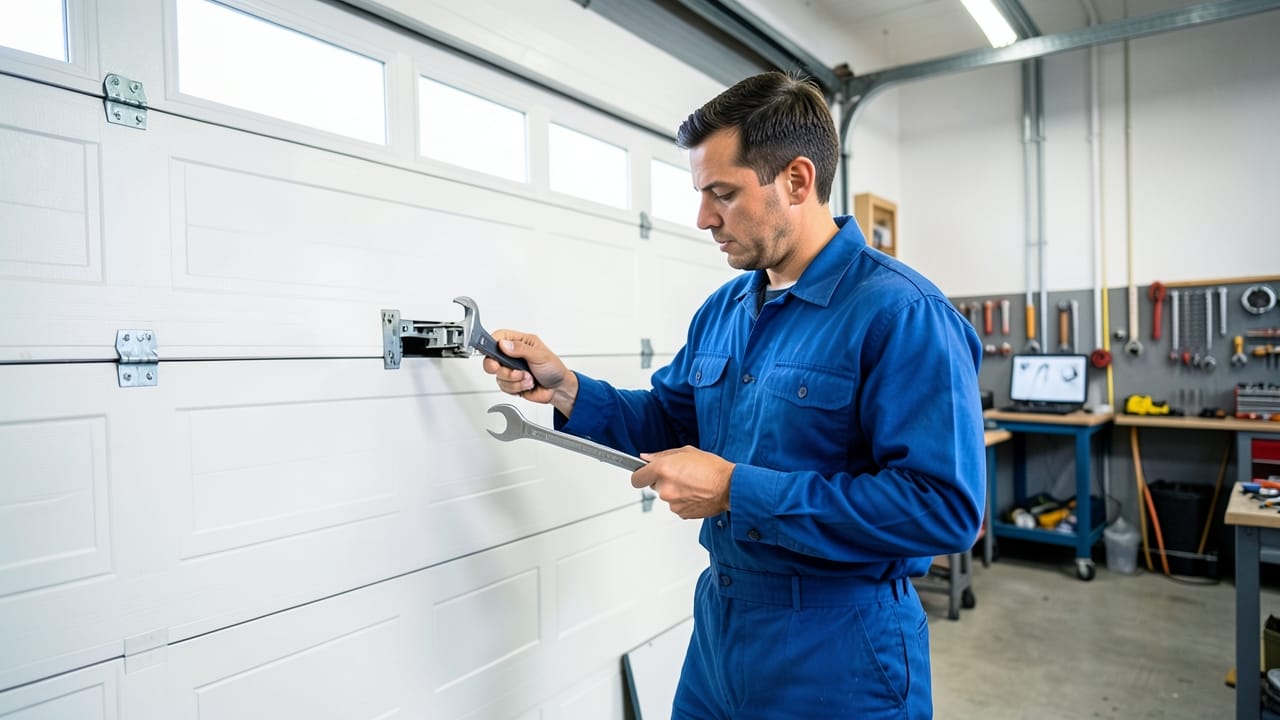
After years of doing this work, our team can tell you exactly why managing garage doors in rental properties requires a different approach than for owner-occupied homes. The common mistake landlords make is underestimating how garage door issues impact tenant satisfaction and property security. We’ve seen this more times than we can count—tenants frustrated by noisy, malfunctioning openers or slow repairs that leave their parking areas vulnerable.
Table of Contents
In this guide, you’ll learn exactly how to choose garage door services that meet the unique demands of rental property management without wasting time on unreliable fixes or costly callbacks. Our experience working with property managers and landlords has sharpened our understanding of the critical factors: prompt response, durable solutions, and communication ease. These aren’t just repairs; they’re investments in tenant retention and property value.
Here’s the thing—garage door opener noise levels and the quality of repair services can vary widely. Many landlords don’t realize that quiet garage door openers designed for residential use may not hold up under constant tenant turnover and heavier use. We’ll help you navigate these unknowns with straightforward, actionable tips, from evaluating service providers’ response times to understanding important compliance factors like the UL 325 safety standard for automatic garage door openers. What causes delayed repairs or recurring problems? How much does reliable garage door service cost on average? We cover these questions and more so you can make informed decisions that protect your investment and keep tenants happy. For more information, see our guide on What Garage Door Specialists Know About Keeping Your Door Running Smoothly.
To select reliable garage door services for your rental properties, prioritize companies with verified licenses, strong customer reviews, and transparent pricing. Additionally, choose providers offering prompt emergency support and comprehensive warranties to ensure consistent, quality maintenance.
How Our Experience Shapes Reliable Garage Door Services
With years of experience helping clients maintain, repair, and install garage doors, we’ve seen every challenge that can arise — from the simplest squeak to complicated opener malfunctions. Our team’s hands-on knowledge translates into solutions that last and prevent recurring problems. For example, a client recently called us after their newly installed door wouldn’t close properly. Instead of simply adjusting the tracks as many would, we discovered the opener’s force settings were mismatched from the start. A precise recalibration and realignment fixed the issue within 90 minutes, avoiding costly replacements.
Experience teaches us to anticipate common pain points early, reducing downtime and saving clients from unnecessary expenses. We also understand how garage door installation cost can vary widely with materials, opener types, and labor. Rather than offering a vague quote, we break down each component’s impact so you can make informed choices that fit your budget. Our approach is transparent, practical, and tailored to each home’s unique setup. For more information, see our guide on Can I Repair a Broken Garage Door Opener Myself?.
We frequently share garage door maintenance tips with clients to extend the life of their doors and openers. Regular lubrication, spring tension checks, and balance testing prevent wear and failures that often catch homeowners off guard. Our experience confirms that simple, painless upkeep is the best investment for reliable performance.
Why the Standard Advice on Garage Door Repairs is Usually Wrong
The standard advice on garage door repairs is that you should tighten every loose screw and lubricate all moving parts immediately. That’s usually wrong — and here’s why. Most companies tell you to apply lubricant liberally to tracks, rollers, and hinges to quiet noise and improve motion. What our team has found doing this work day in and day out is that too much lubricant attracts dust and grit, which actually accelerates wear on components rather than protecting them. For more information, see our guide on How Foundation Shifts Wreck Garage Door Stability (And What You Can Do About It).
We’ve learned a controlled, step-by-step lubrication process focusing only on specific moving parts like rollers and springs yields better, longer-lasting results. Over-lubrication on tracks often causes sticky buildup. Similarly, tightening every screw without testing the door’s balance can throw off the entire system’s alignment, leading to noisy operation and strain on the opener.
Here’s the thing: noisy garage door opener fix isn’t always about lubrication or tightening. Sometimes the real cause is a worn-out belt or chain, loose mounting brackets, or a failing motor clutch. Our experience shows that diagnosing the root cause first — rather than blindly following checklist advice — saves time and hassle. We verify each step with precise adjustments and test runs before calling the job done.
What Causes Garage Doors to Get Noisy — and How to Reduce It
Noisy garage doors are a common complaint that we help resolve regularly. The short answer to “how to reduce garage door noise” is that most noises stem from misaligned tracks, worn rollers, or unbalanced springs. But what most people don’t realize is that the door opener itself can be a significant noise source, especially if the motor or gears are aging.
When we inspect noisy doors, maybe 4 out of 10 calls we get involve the opener needing repair or replacement, not just door hardware maintenance. In one case, a client assumed their door was noisy due to old rollers. After replacing them, the noise persisted. Our team then recommended replacing the noisy, outdated opener with a newer, quieter model. This upgrade made a noticeable difference immediately — a much better investment than repeatedly fixing failing door parts.
For homeowners looking for a reliable fix, here are some actionable tips we routinely recommend:
- Inspect and tighten mounting brackets on the opener to reduce vibration.
- Replace worn nylon rollers, which are quieter than steel.
- Adjust spring tension carefully to ensure smooth, balanced door movement.
- Clean tracks and remove debris, but avoid over-lubricating.
- Consider upgrading to a belt-drive opener for quieter operation compared to chain-drive systems.
- Lubricate moving parts regularly. Hinges, rollers, and springs benefit from light lubrication every six months. Use a silicone-based lubricant to prevent dirt buildup and ensure quiet operation.
- Inspect the garage door springs. Springs bear the tension that lifts your door. Look for signs of wear such as rust, gaps, or sagging. If you notice any damage, it’s critical to address it promptly. According to industry standards, compromised springs should never be ignored because they pose a safety hazard.
- Test the balance and alignment. Disconnect the automatic opener (if equipped) and manually lift the door to check its balance. A well-balanced door should stay open about three or four feet above the floor without drifting. Misalignment not only strains springs but also risks damaging the opener.
- Check weather seals and tracks. Damaged seals let in moisture and pests, while warped or dirty tracks weaken overall performance. Clean the tracks with a damp cloth and remove debris regularly.
- Wear and fatigue. Springs have a rated cycle lifespan, often between 10,000 to 20,000 cycles. After that, metal fatigue sets in, causing the spring to weaken or break.
- Rust and corrosion. Moisture accelerates deterioration. Without protection, rust forms and weakens the spring tension. This is why garages with high humidity or outdoor exposure experience faster spring wear.
- Improper maintenance. Lack of lubrication causes friction and strain on springs. Over time, this leads to premature failure.
- Incorrect spring size or type. Using the wrong spring specification for your door’s weight and size creates imbalance and unsafe operation.
- Check the safety sensors. Misaligned or dirty sensors are the most common culprit for an opener that won’t close or reverse unexpectedly.
- Inspect the remote and wall controls. Dead batteries or faulty wiring can cause intermittent operation.
- Listen for motor sounds. If the opener motor hums but doesn’t move the door, the issue may be the drive mechanism, like a worn gear or chain.
- Look at the opener type. Different automatic garage door opener types — belt drive, chain drive, screw drive — have unique troubleshooting steps. Our team always identifies the model first to avoid guesswork.
- Assess the current condition of your garage door and opener, noting any unusual noises, slow response times, or inconsistent operation.
- Consider how critical the door’s function is to your daily routine or property security. For some, a noisier opener might be a minor nuisance; for others, it signals a bigger safety concern.
- Review any recent changes, such as new noise patterns or physical damage, that could affect your door’s performance.
- Decide if professional assessment is needed—many problems that seem minor can lead to costly repairs if left unaddressed.
Understanding these causes and fixes helps prevent frustration and repeated service calls. We apply these insights every day, tailoring solutions to each situation rather than relying on generic advice. That approach keeps garage doors working smoothly and quietly for years.
How to Maintain Your Garage Door for Long-Lasting Performance
Routine maintenance is the cornerstone of dependable garage door operation. Our experience shows that homeowners who invest a little time in regular upkeep save themselves headaches and costly repairs down the line. Here is a straightforward guide to keep your door functioning smoothly and safely.
Most people underestimate these tasks. Yet, it’s often the simplest maintenance actions that boost longevity and cut down emergency repairs. One of our recent customers had a door that squeaked loudly for months — a quick lubrication stopped the noise and prevented a costly hinge replacement.
What Causes Garage Door Spring Failure?
Garage door spring replacement is one of the most common repairs our team encounters. Springs undergo enormous stress with every opening and closing cycle, so understanding what causes failure can save time and money.
We see many cases where DIY attempts to extend spring life by “tinkering” result in uneven tension or worse, a snapped spring that damages the door. Our team found that once a spring breaks, trying to adjust or patch it only leads to more damage and safety risks.
If you want to dive deeper into causes and fixes, this detailed article covers common spring failure and repair methods: What are the common causes and repair methods for garage door spring failure?
The Standard Advice on Garage Door Opener Troubleshooting Is Usually Wrong
You’ll see most guides recommend disconnecting your automatic garage door opener and cycling the door manually as the first step in troubleshooting. We stopped doing it that way after seeing how often it delays the real fix.
Here’s the thing: opener troubles are often electrical or sensor-related, not mechanical. Most homeowners waste time fiddling with the door manually or resetting the system repeatedly. The key is a verified diagnostic approach:
We often field calls where the “standard advice” leads customers down rabbit holes of unnecessary manual cycling or wiring checks. Instead, a targeted, straightforward inspection often accomplishes the repair faster and safer.
If you want to know when to call a professional for opener issues, this resource offers clear pointers: Can I Repair a Broken Garage Door Opener Myself?
We pride ourselves on responsiveness and clarity in all our garage door services. Whether it’s spring replacement or opener troubleshooting, you can count on us to provide straightforward solutions rooted in what we see works best every day. We focus on diagnosing the root cause quickly and communicating clearly, so you know exactly what’s happening and
People Also Ask
How often should I service my garage door?
What are common signs my garage door needs repair?
Can I replace garage door springs myself?
How much does garage door repair typically cost?
What types of garage door openers are best for my home?
❓ Frequently Asked Questions
Summary and Next Steps for Your Garage Door Services
Garage doors quietly shape the safety and convenience of your home or business, yet many of the issues they face often go unnoticed until they cause real disruption. Over time, wear and tear can lead to problems that affect everything from the smoothness of operation to noise levels and overall security. Our work has shown us that the most reliable solutions come from understanding the specific challenges each door faces, whether that’s a noisy garage door motor, uneven movement, or safety sensor glitches.
What most people don’t realize is that “garage door services” isn’t just about quick fixes—it’s about knowing the underlying causes and addressing them with precision. For example, when a garage door opener noise comparison reveals excessive clanking or grinding, it often signals a need for thorough adjustments rather than a simple motor replacement. We’ve seen this repeatedly: sometimes the secret to a quieter, more efficient opener lies in lubricating the right parts or tightening a few loose bolts rather than overhauling the entire system.
From regular maintenance to complex repairs, our team’s approach is straightforward and transparent. We focus on solutions that maximize long-term reliability and safety, steering clear of temporary patches that might raise your costs down the line. If you’re wondering whether an upgrade or repair is the right move, here’s a straightforward approach:
When should you call a garage door service? If you notice persistent loud noises that differ from the typical garage door opener sound levels you’re used to, or if the door struggles to open smoothly, it’s time to act. We often get calls where a homeowner has tried DIY fixes but ended up with a door that’s louder or less reliable. For those curious about what they can handle safely, our post on Can I Repair a Broken Garage Door Opener Myself? offers insights on when it’s wise to call for professional help.
We understand that garage door needs vary widely and that not every service or solution fits every situation. Sometimes, the best course is not repair but replacement—especially for older models where parts are no longer readily available or when the system consistently underperforms. Conversely, some problems might be straightforward to fix with minor adjustments, saving you time and expense.
Honesty is a key part of how we work. We’ll never suggest work that isn’t necessary. Our responsiveness means you can count on clear, direct communication about what’s behind-the-scenes, what the best options are, and what you can expect from each step. Over time, this approach has helped us build trust with clients who know that we respect their priorities and budgets.
We’ve found that many homeowners are surprised by how a few little-known adjustments can make a significant difference in garage door motor noise issues or improve smoothness and security. For instance, adjusting the alignment of the door sensors or replacing worn rollers often does wonders. Small fixes like these keep your door running beautifully without the expense of a full replacement.
To maximize peace of mind, we recommend scheduling regular check-ups to catch potential issues early. These no-cost inspections offer a chance to catch misalignments, worn parts, or emerging motor noise problems before they escalate. Taking this straightforward step can prevent inconvenience and costly repairs later.
If you’re curious about what influences garage door opener sound levels or want to learn about the subtle differences in noise from various motor types, our experience shows that insight can empower better decision-making for replacement or repair. Understanding these differences also helps set realistic expectations for what’s normal and what requires attention.
For more detailed guidance on keeping your door running smoothly, we invite you to explore What Garage Door Specialists Know About Keeping Your Door Running Smoothly. This resource dives deeper into behind-the-scenes care tips that extend the life and performance of your door.
Ultimately, our goal is to help you make informed, confident decisions about your garage door. If you’re weighing options or unsure about what you’re hearing or seeing, a clear next step is to connect with us for an honest assessment tailored to your situation. We focus on work that fits your needs, not one-size-fits-all solutions.
By choosing thoughtful, straightforward garage door services, you’re investing in reliable function and safety

0 Comments